Vincent B. Troiano

The Silent Voice
in Education

The Importance of Involving Classroom Teachers

A 36-year veteran educator examines how the 1960s reform era sidelined classroom teachers -- and what it cost American students in special education and beyond.

The Silent Voice in Education book cover by Vincent B. Troiano
About the Book

When reform moved faster than the classroom

"Teachers should have a leading role in what happens in their classrooms."

Up until the 1960s, elementary classroom instruction was based on the most effective procedures developed by classroom teachers, and American education was ranked number one in the world.

A downward trend began with "New Math" and reading programs that discouraged the use of phonics. These programs were developed within higher education and were supposed to be more effective than the procedures favored by the great majority of classroom teachers.

That downward trend accelerated in the 1980s, when the evaluation of classroom instruction was changed. Teachers were no longer recognized as having individual, yet effective, styles of teaching. Higher education created new criteria it considered more effective in the classroom, and this became the new basis for teacher evaluation and continued employment.

The author's related article, "Whatever Happened to Arithmetic," offers parents an explanation of the origins and use of "New Math" in the elementary school curriculum.

When the book was written, St. Lucie County, Florida had two K-8 schools. Today there are eleven, with a twelfth under construction. The middle school concept, with its varied mix of grade levels, was another product of the 1960s, and it apparently does not offer the educational continuity that a K-8 school does. Its sketchy record of success is most likely due to teacher competence, rather than the application of new psychological theory or school organization.
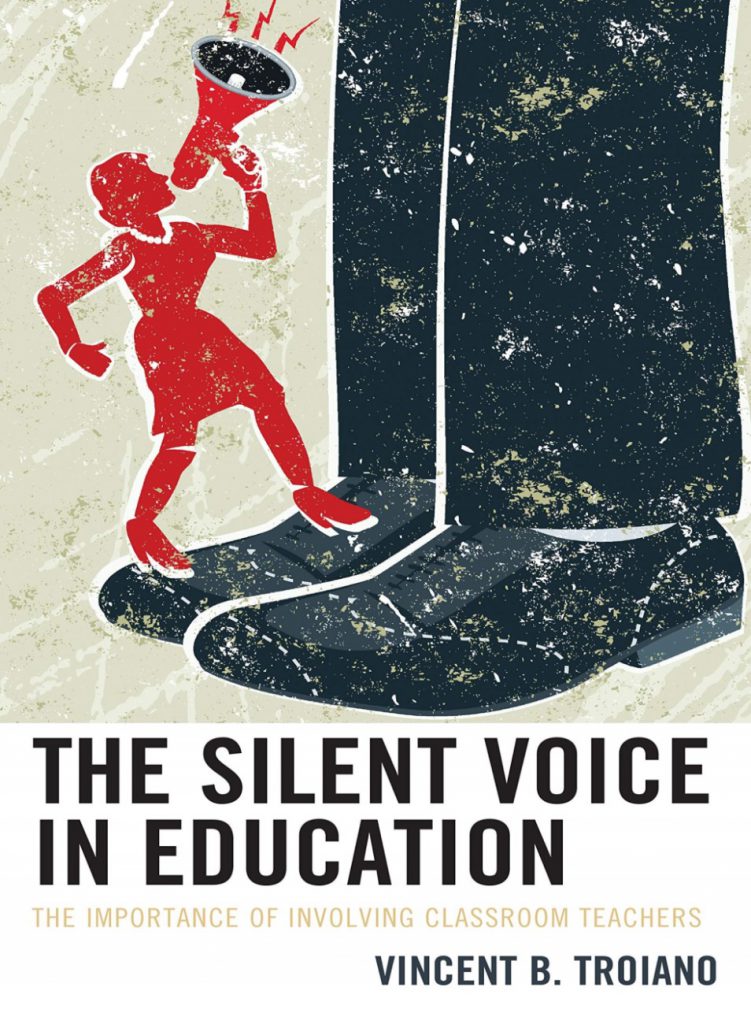

Table of Contents

What's inside

Intro The 1960s and "Change" Introduction
1 A Two-Tiered System
2 Local Leadership
3 Classroom Teachers React to the Times
4 Special Education: Basis and Reform
5 Classroom Management in Special Education
6 Education Establishment System Failure
7 Teacher-Initiated Change that has Stood the Test of Time
8 Poor Leadership in Real Time
9 Special Education as a Bureaucracy
10 IEP as Legal Document vs Classroom Teacher Day-to-Day Evaluations
11 The Teacher as Facilitator vs Goals and Objectives
12 Local Control of Education: A Beginning
13 Individual Instruction
Vincent B. Troiano, author of The Silent Voice in Education
About the Author

Vincent B. Troiano

Educator, Old Bridge Township School System, New Jersey

Vincent B. Troiano taught for the Old Bridge Township School System in New Jersey for 36 years: grades 4-6 for 9 years and special education for 27 years. His special education teaching career began in self-contained classes working with students identified as Emotionally Disturbed.

Concentrating on learning disabilities was an outgrowth of that experience. Over the course of his career, Troiano developed a firsthand understanding of the gap between educational policy and classroom reality -- a gap that forms the heart of this book.

The Silent Voice in Education draws on decades of direct observation and experience to argue that teachers, not bureaucracies, must be the primary voice in shaping education policy for the students they serve every day.

From the Blog

Perspectives on education reform

View all posts →